About
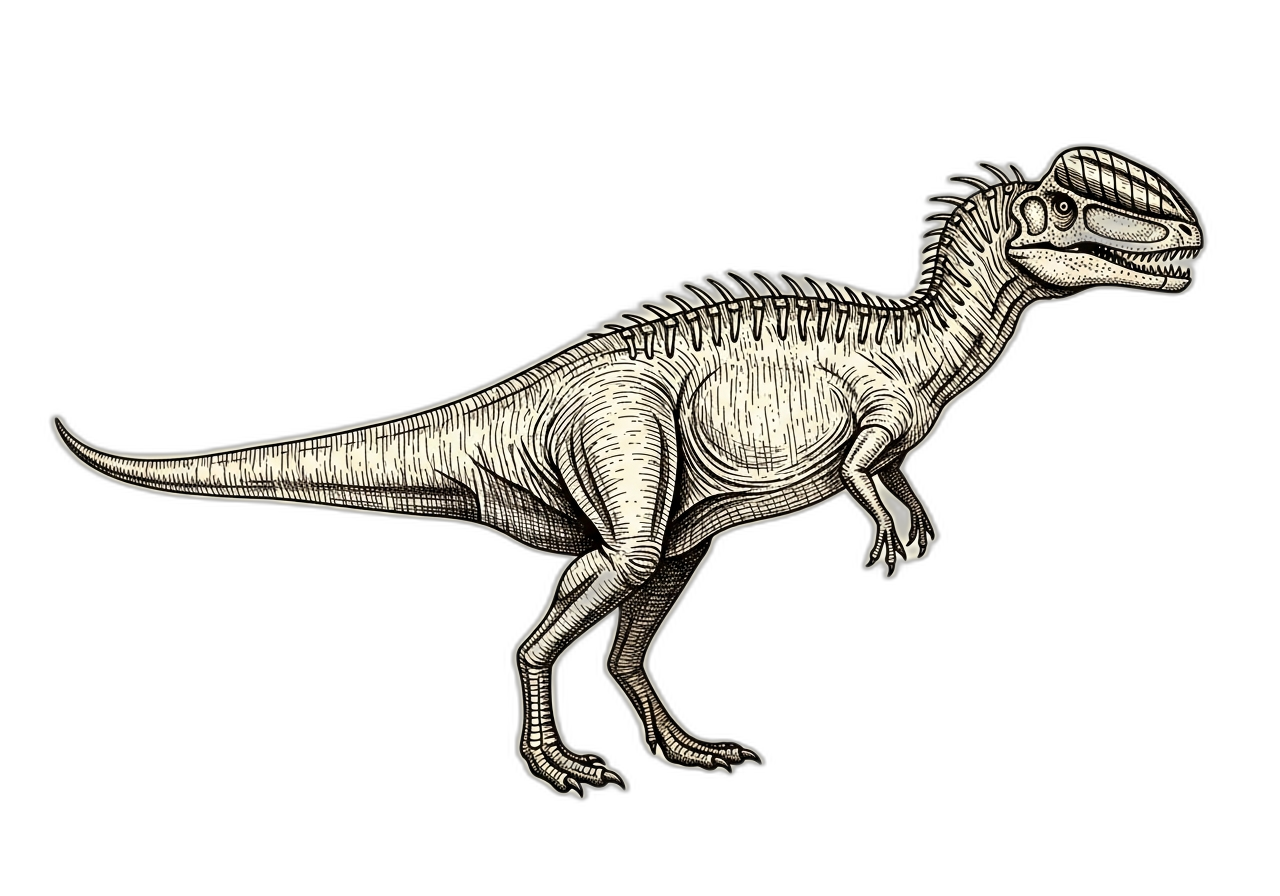
Dilophosaurus was one of the earliest large predatory dinosaurs, roaming what is now Arizona approximately 186 million years ago during the Early Jurassic. At around 6-7 meters long, it was the of its ecosystem, featuring a distinctive pair of parallel bony crests running along the top of its skull. These fragile crests were likely used for species recognition or sexual rather than combat.
As a , Dilophosaurus was built for active predation with powerful hind legs, a long counterbalancing tail, and grasping forelimbs with sharp claws. Its skull was surprisingly delicate for its size, with a distinctive notch between the and bones, leading some paleontologists to speculate about its feeding strategies. It likely hunted smaller dinosaurs and other of the Early Jurassic landscape.
The discovery history of Dilophosaurus spans decades of refinement. Three skeletons were found in northern Arizona in 1940 by a Navajo man named Jesse Williams, who led paleontologist Samuel P. Welles to the site. Welles initially classified the specimens as a species of Megalosaurus in 1954, naming it after John Wetherill, a notable explorer of the region. It wasn't until Welles discovered a larger, better-preserved specimen in 1964 — one that clearly showed the paired head crests — that he realized this animal deserved its own genus, formally naming it Dilophosaurus in 1970.
Perhaps the most important thing to know about Dilophosaurus is what it wasn't: the 1993 film Jurassic Park depicted it with a fictional neck and the ability to spit blinding venom. There is absolutely no fossil evidence for either feature. The real animal was far more impressive — a 400-kilogram predator that didn't need Hollywood embellishments to be formidable.
Where fossils were found
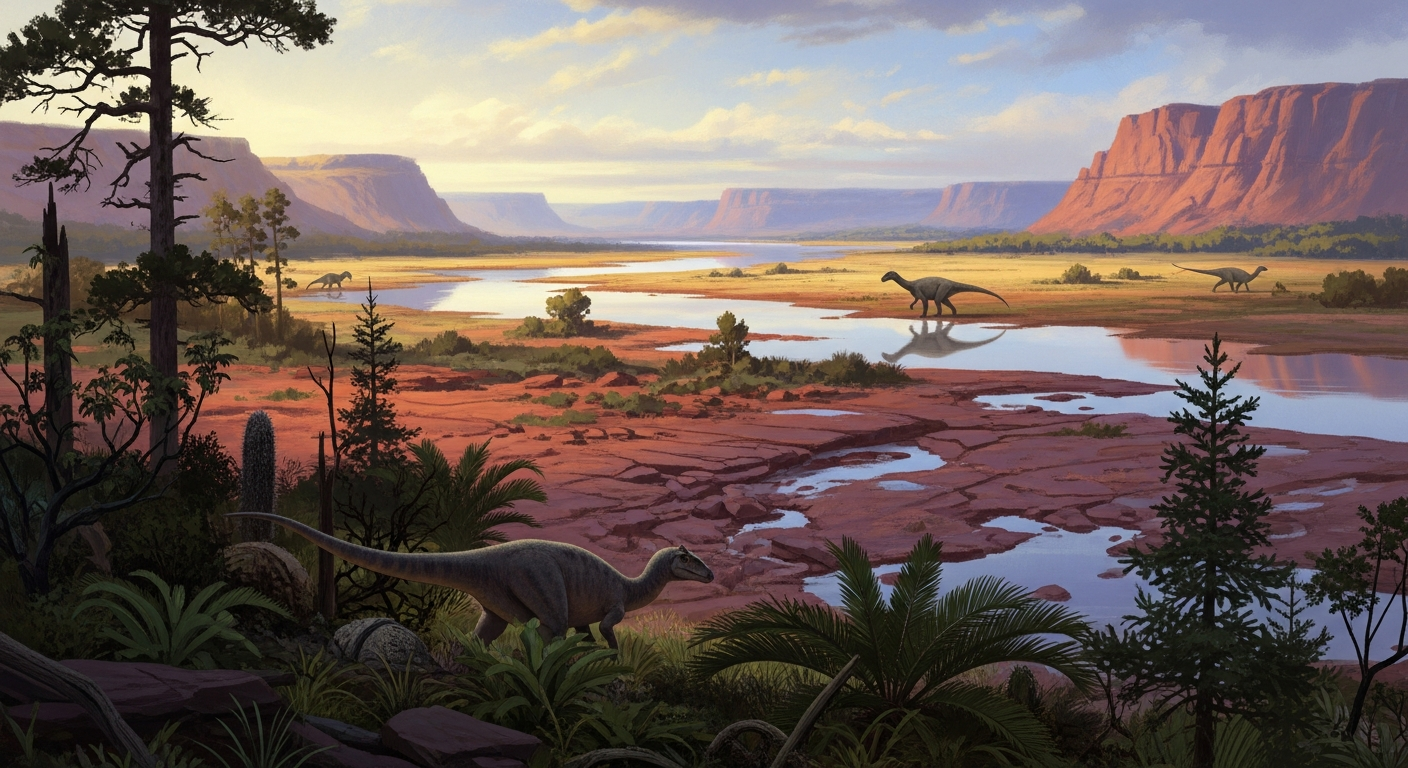
Kayenta Formation
Arizona, Utah, Colorado, Nevada · United States
192.9–184.2 million years ago(8.7m year span)
Where Dilophosaurus Roamed
During the Early Jurassic, Dilophosaurus roamed the floodplains and river valleys of what is now the American Southwest, then part of the western margin of Pangaea near the equatorial belt. This region featured a semi-arid to seasonally wet climate with meandering river systems, where vast desert dune fields bordered lush riparian corridors teeming with ferns, cycads, and conifers.
Keep exploring the vault
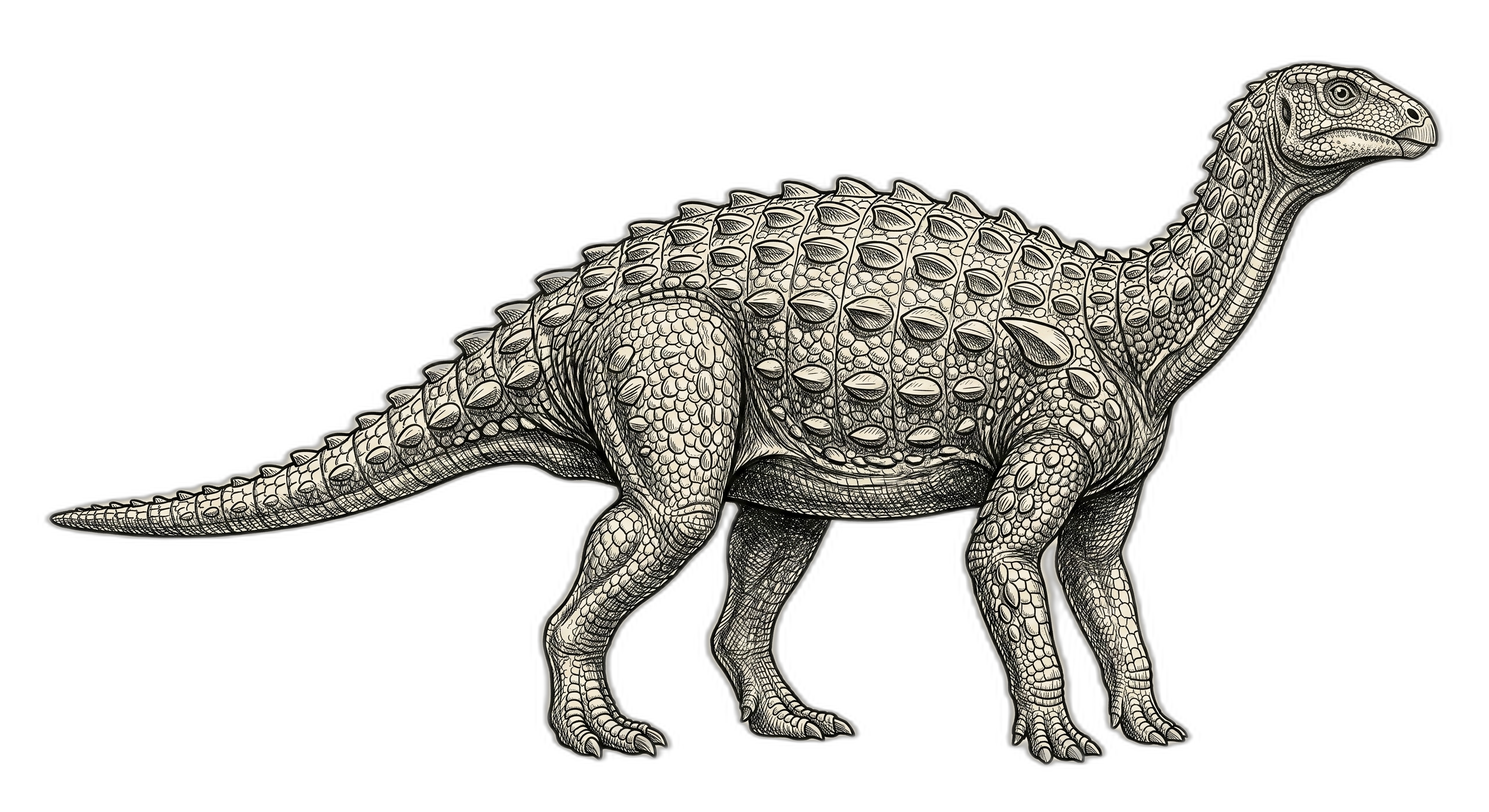
Scelidosaurus
Scelidosaurus harrisonii
Dilophosaurus was a large Early Jurassic theropod (up to 7m) that overlapped temporally with Scelidosaurus.
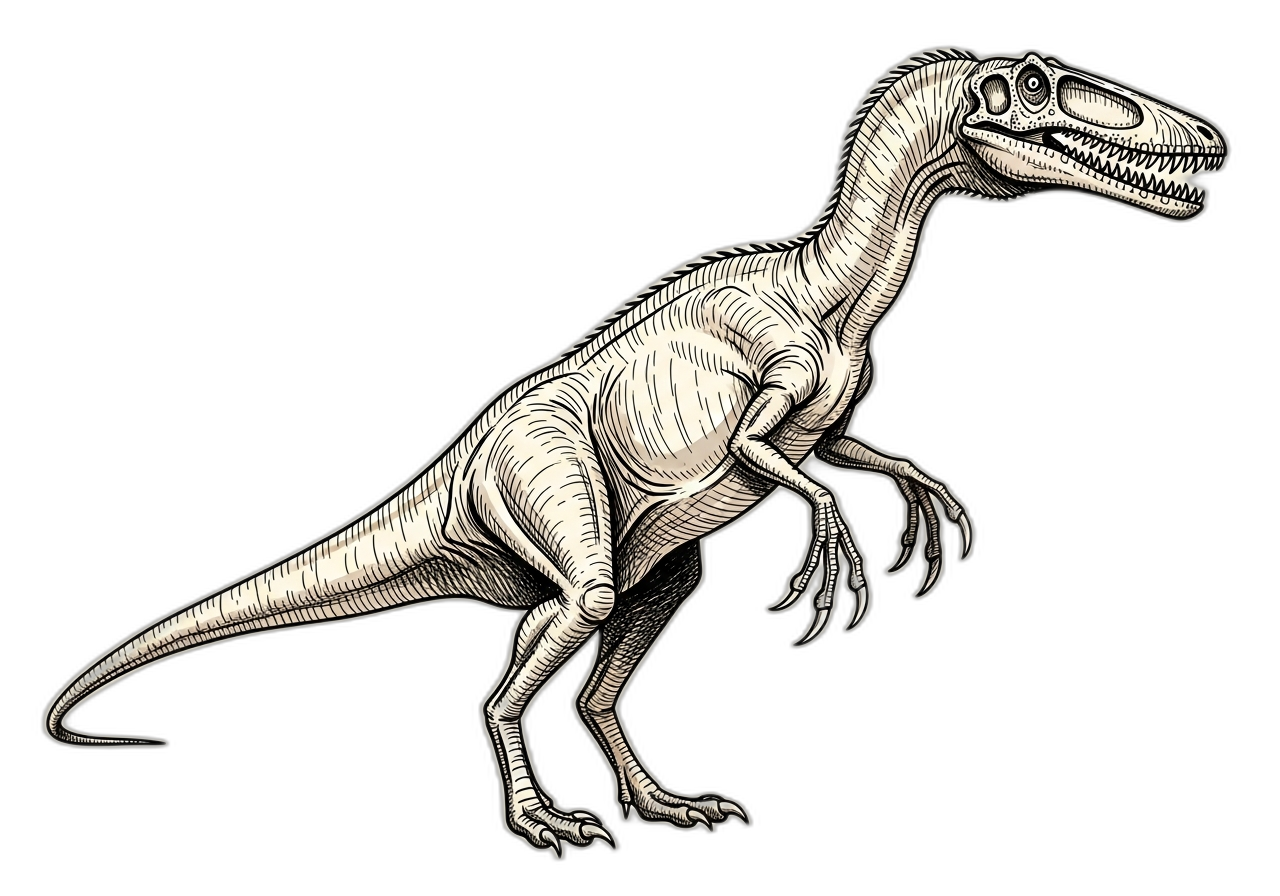
Herrerasaurus
Herrerasaurus ischigualastensis
Herrerasaurus represents the basal theropod body plan from the Late Triassic that gave rise to the neotheropod lineage including Dilophosaurus.
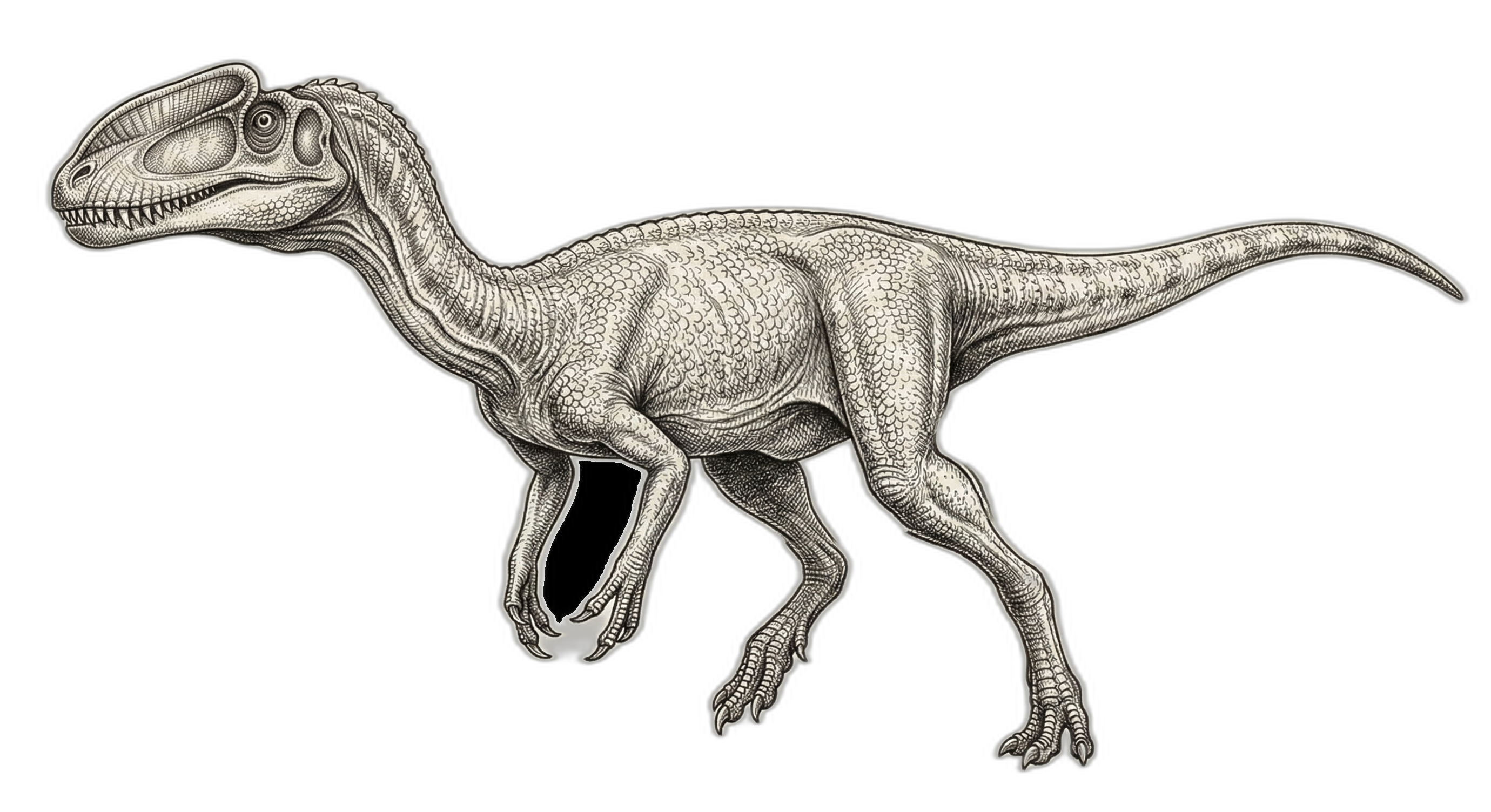
Monolophosaurus
Monolophosaurus jiangi
Dilophosaurus and Monolophosaurus both evolved distinctive cranial crests as display structures, representing parallel experiments in theropod ornamentation during the Early-Middle Jurassic.
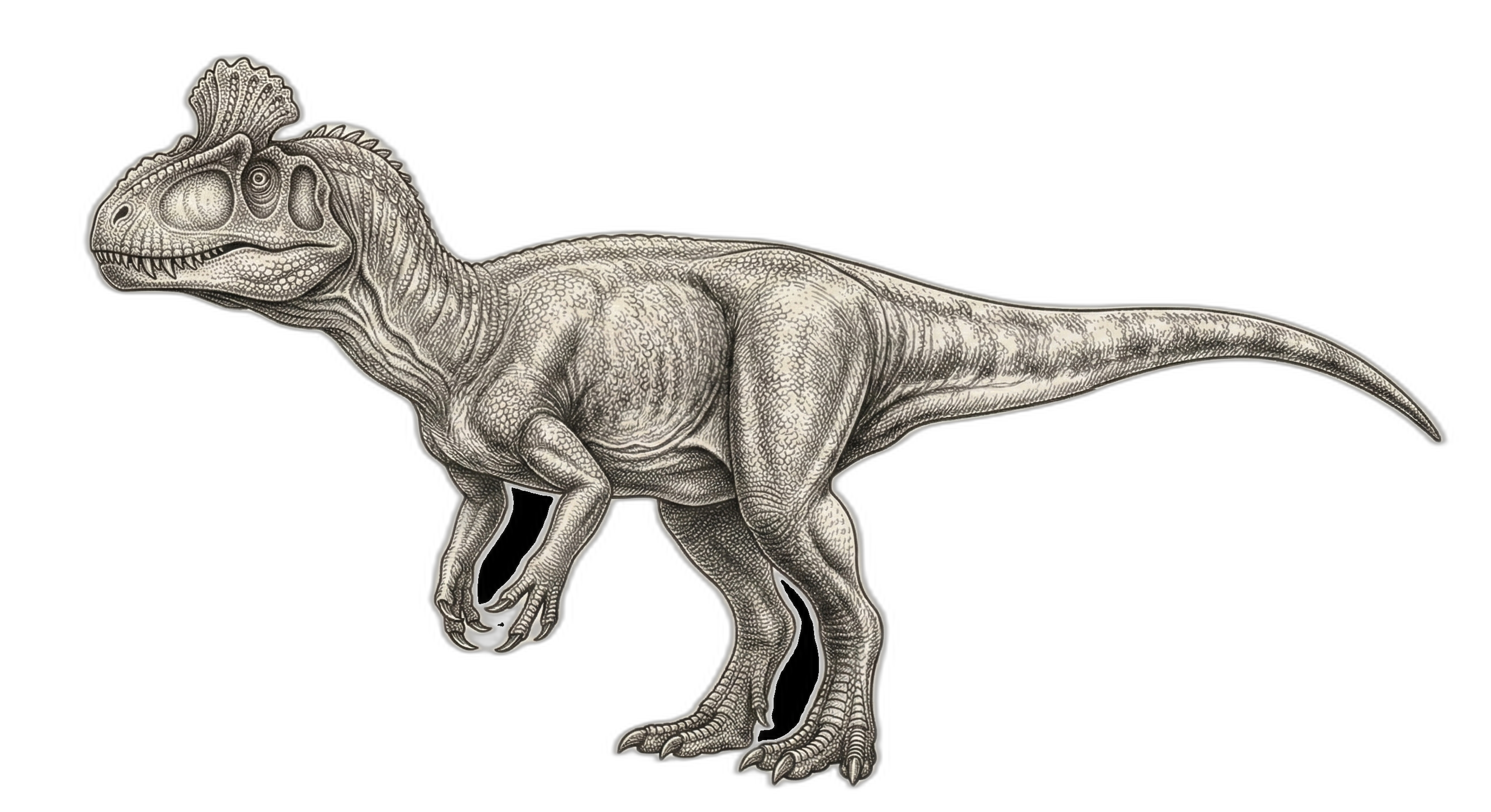
Cryolophosaurus
Cryolophosaurus ellioti
Both Cryolophosaurus and Dilophosaurus are early theropods that independently evolved prominent cranial crests, representing parallel experimentation with head ornamentation likely used for species recognition or display.
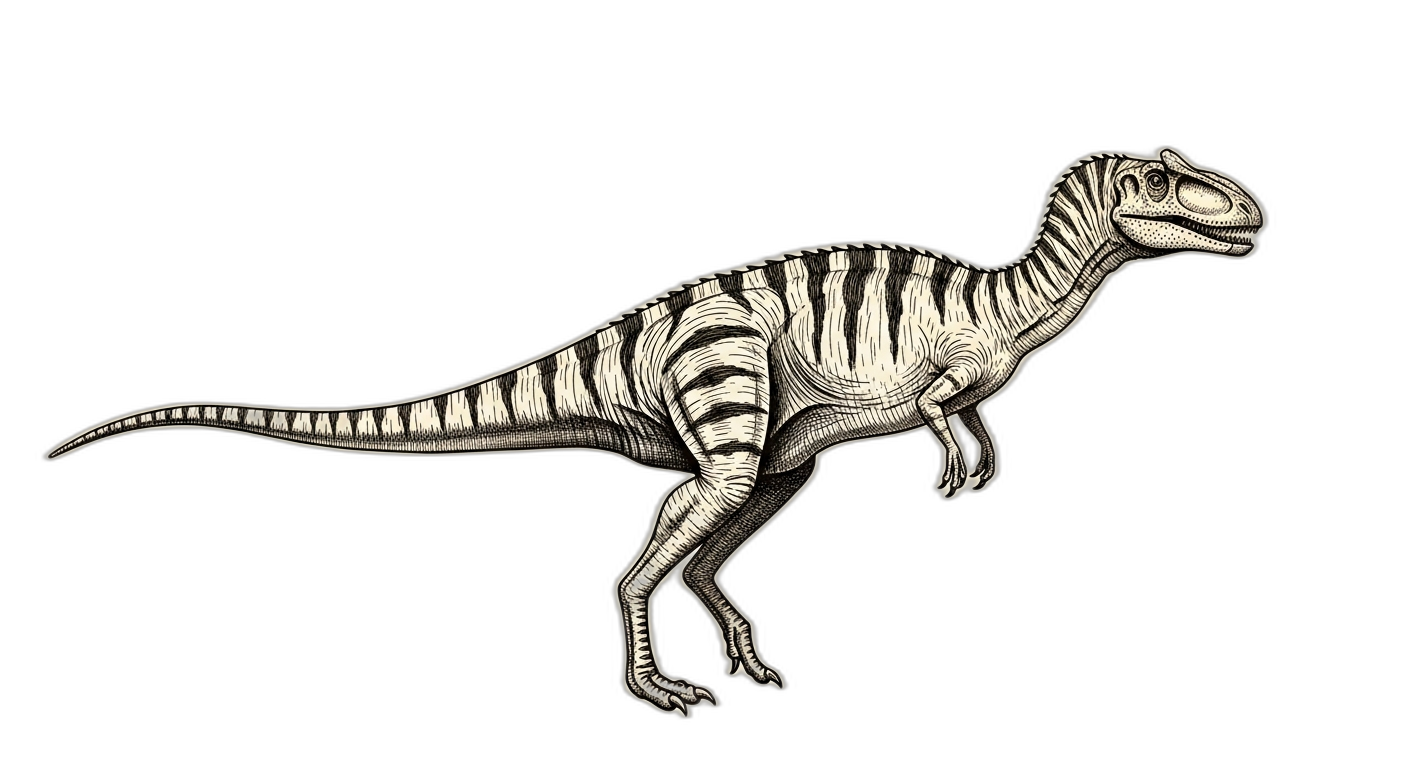
Coelophysis
Coelophysis bauri
Both are Early Jurassic theropods from western North America, with Coelophysis from the slightly earlier Chinle Formation and Dilophosaurus from the Kayenta Formation.
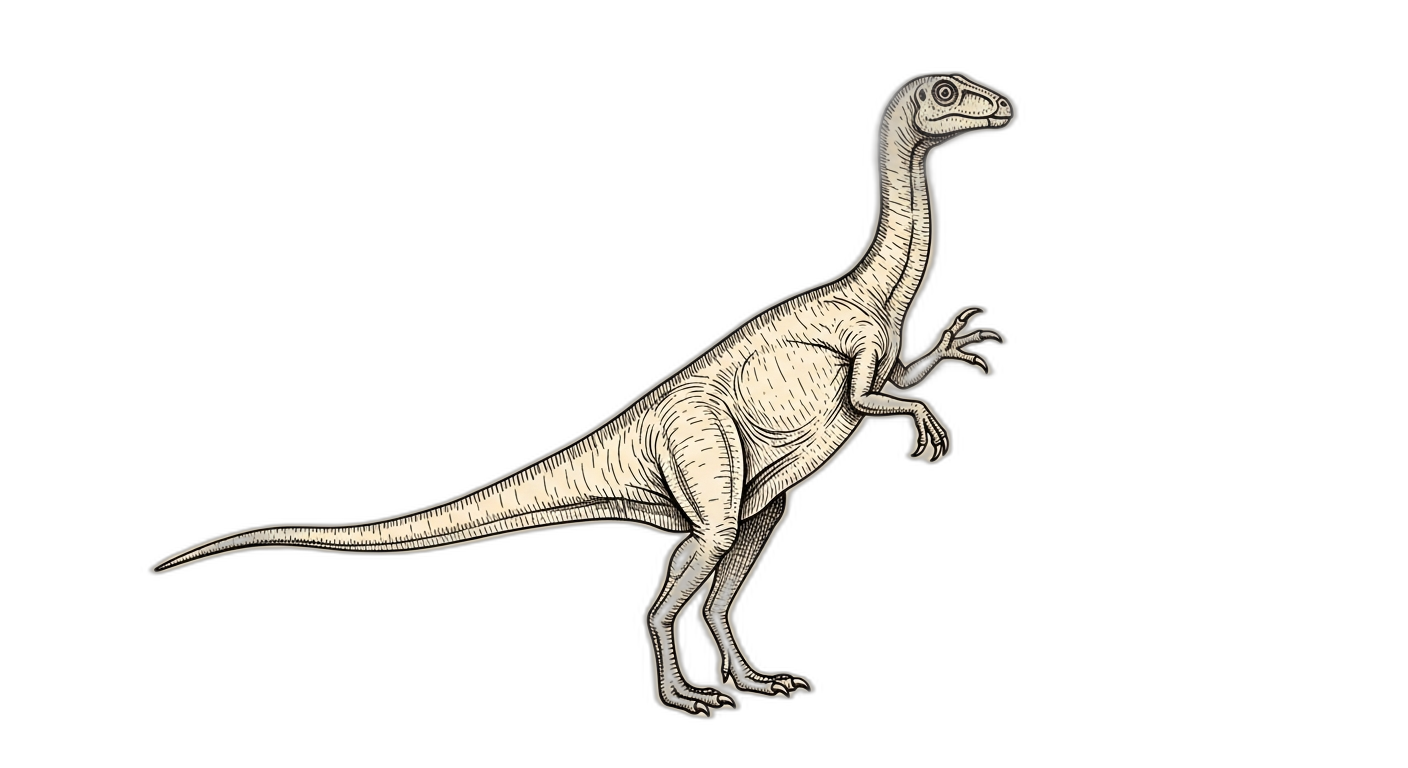
Massospondylus
Massospondylus carinatus
Massospondylus is a contemporary Early Jurassic prosauropod from southern Africa, representing the type of early sauropodomorph herbivore that coexisted globally with early large theropods like Dilophosaurus.