About
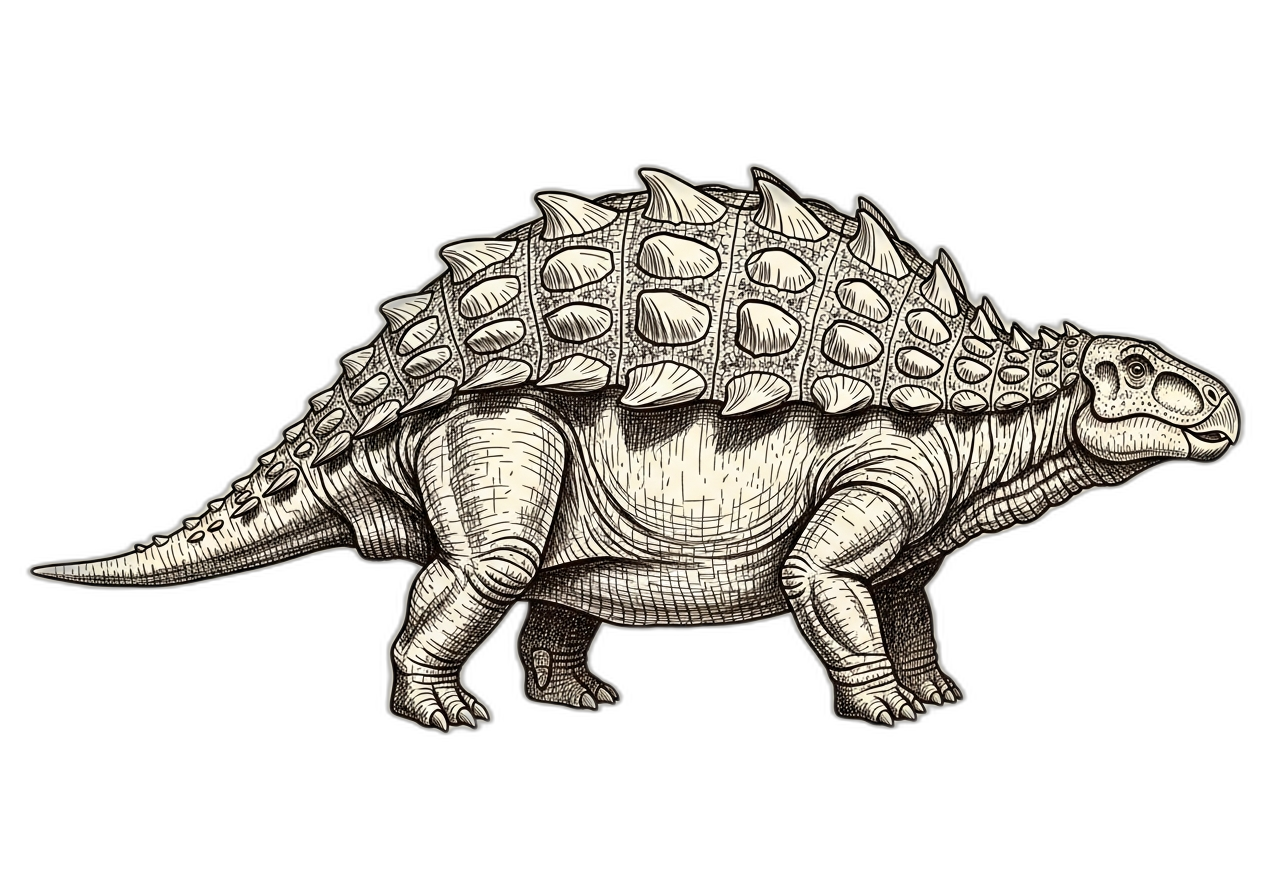
Borealopelta markmitchelli stands as one of the most extraordinary dinosaur discoveries of the twenty-first century, a so exquisitely preserved that it resembles a sculpture rather than a fossil. This armored herbivore roamed the forests of what is now Alberta, Canada, approximately 110 million years ago during the Early Cretaceous period.
Measuring roughly eighteen feet in length and weighing an estimated 2,800 pounds, Borealopelta was a formidable presence in its environment. Its body was encased in bony armor called , arranged in intricate patterns across its back and flanks. Two prominent shoulder spikes jutted outward, likely serving both as defensive weapons against predators and as displays for communication with rivals or potential mates. Unlike its cousins, Borealopelta lacked a , relying instead on its impressive armor and low-slung, tank-like build for protection.
What makes this particular specimen revolutionary is its remarkable state of preservation. Discovered in 2011 by mining machine operator Shawn Funk at the Suncor Millennium Mine near Fort McMurray, the fossil retained not just bones but skin, scales, and even traces of organic compounds. Analysis revealed evidence of —a darker back and lighter underside—suggesting this heavily armored giant still needed camouflage from predators, hinting at the fearsome theropods sharing its world.
The animal likely wandered through coastal lowlands and river deltas, browsing on ferns and low-growing vegetation. Its final journey ended when its carcass floated out to sea, sinking into sediments that would become marine shale, protecting it for millennia until its rediscovery. The species name honors museum technician Mark Mitchell, who spent over 7,000 painstaking hours liberating this ancient creature from stone.
Where Borealopelta Roamed
During the Early Cretaceous, approximately 111 million years ago, Borealopelta inhabited the coastal plains along the margins of the Western Interior Seaway, a vast shallow sea that was beginning to divide North America. This warm, subtropical region featured lush river deltas and forested lowlands, where the armored dinosaur's remarkably preserved carcass was eventually swept out to sea and entombed in fine marine sediments.
Keep exploring the vault
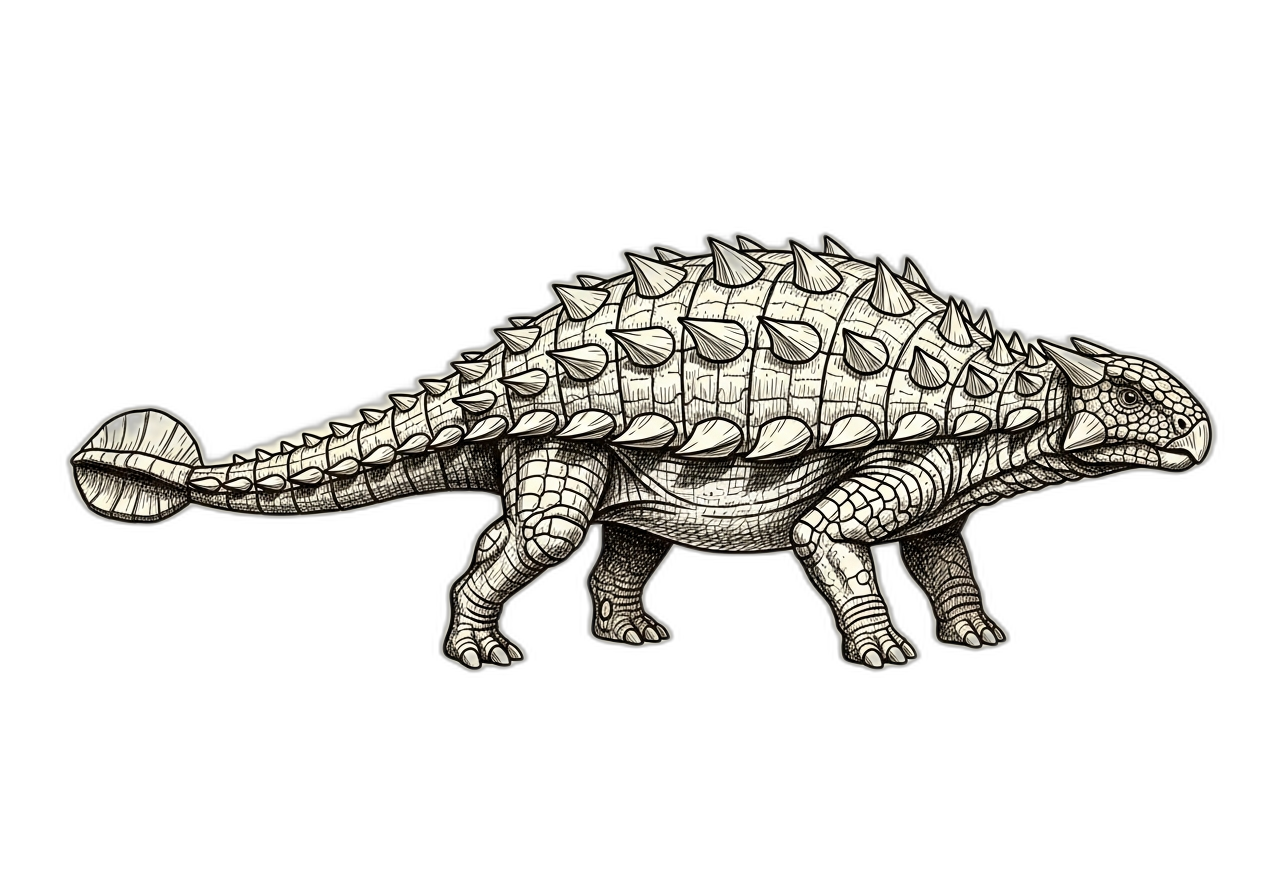
Ankylosaurus
Ankylosaurus magniventris
Both Borealopelta (Nodosauridae) and Ankylosaurus (Ankylosauridae) represent parallel evolutionary experiments in armored defense within Ankylosauria.
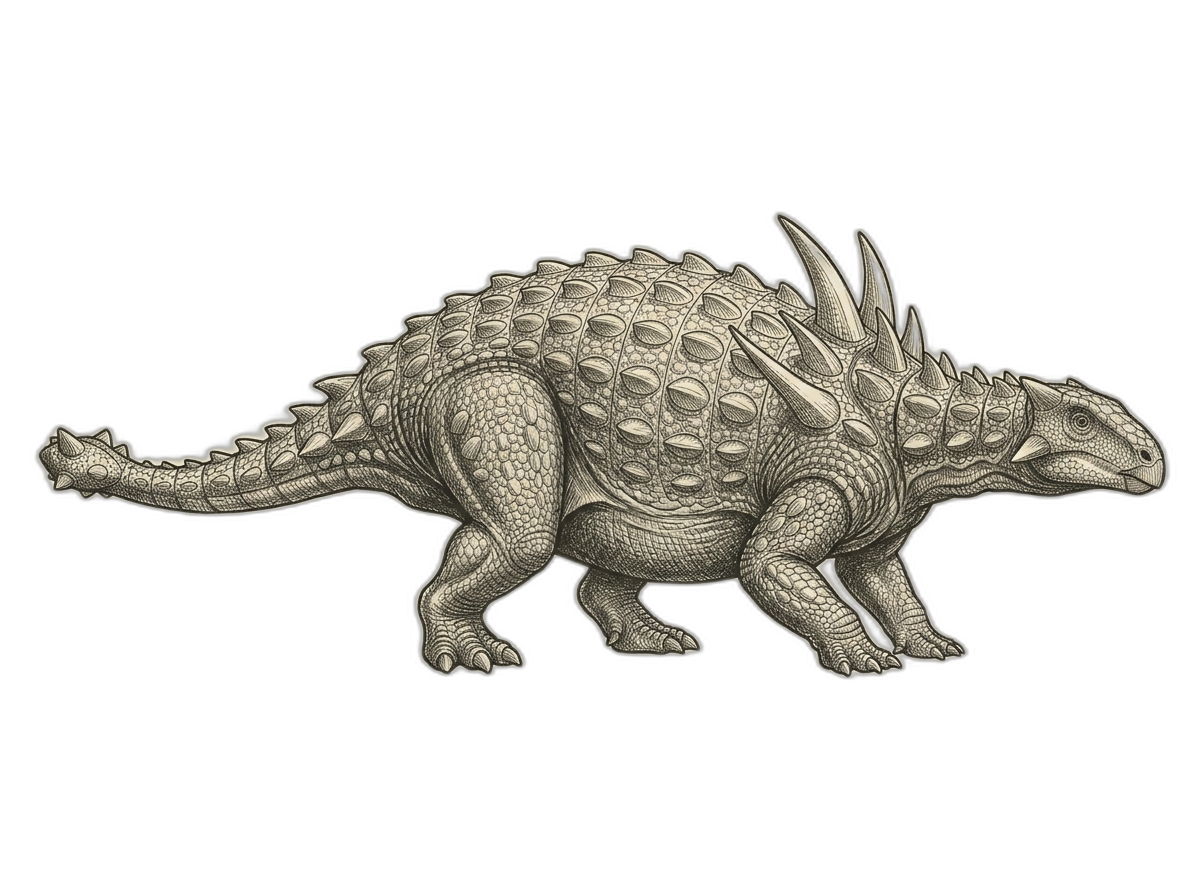
Gastonia
Gastonia burgei
Same family: Nodosauridae
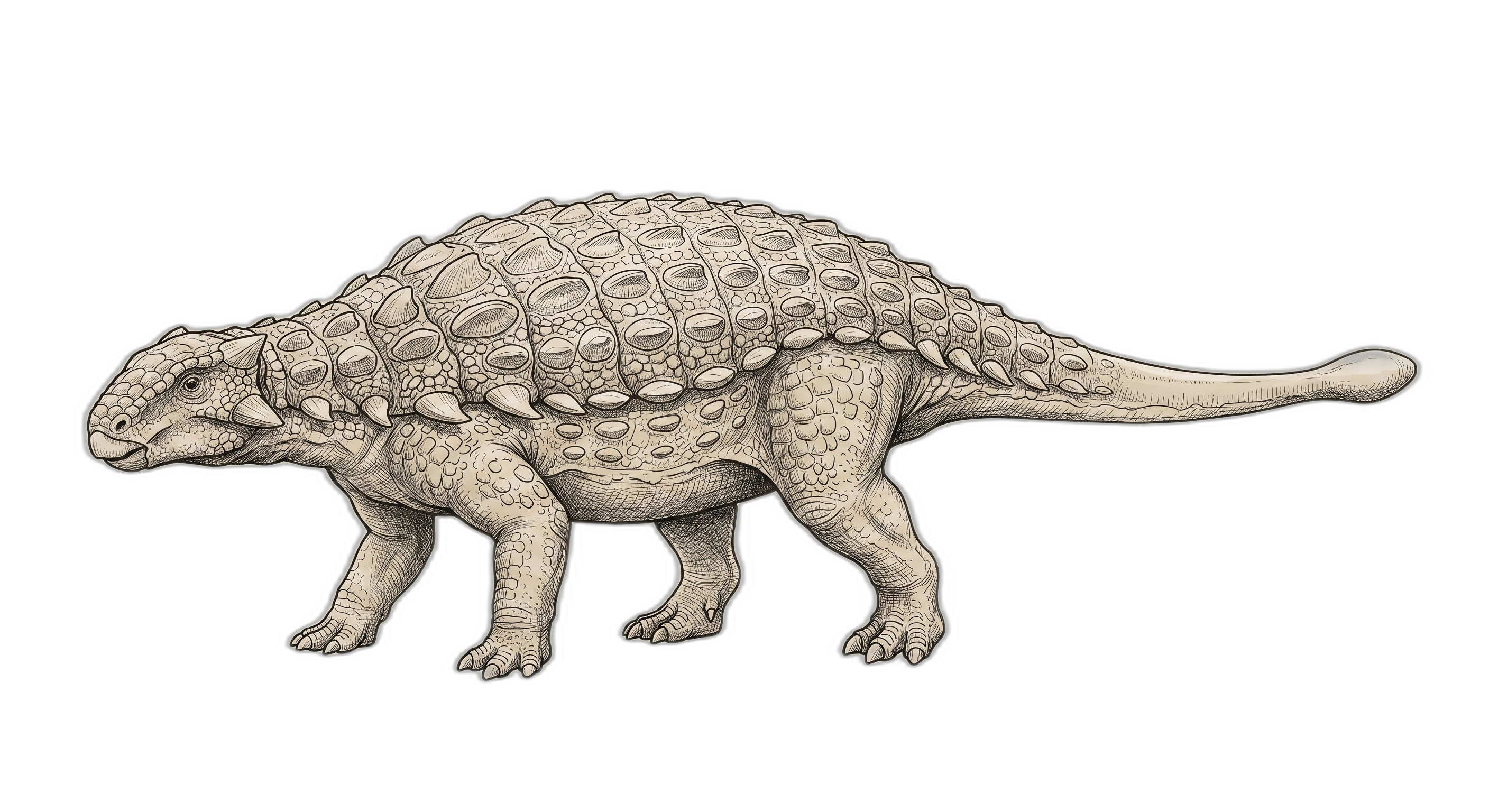
Minmi
Minmi paravertebra
Both are armored nodosaurid-grade ankylosaurs from the Early-Mid Cretaceous showing convergent development of extensive dermal armor.
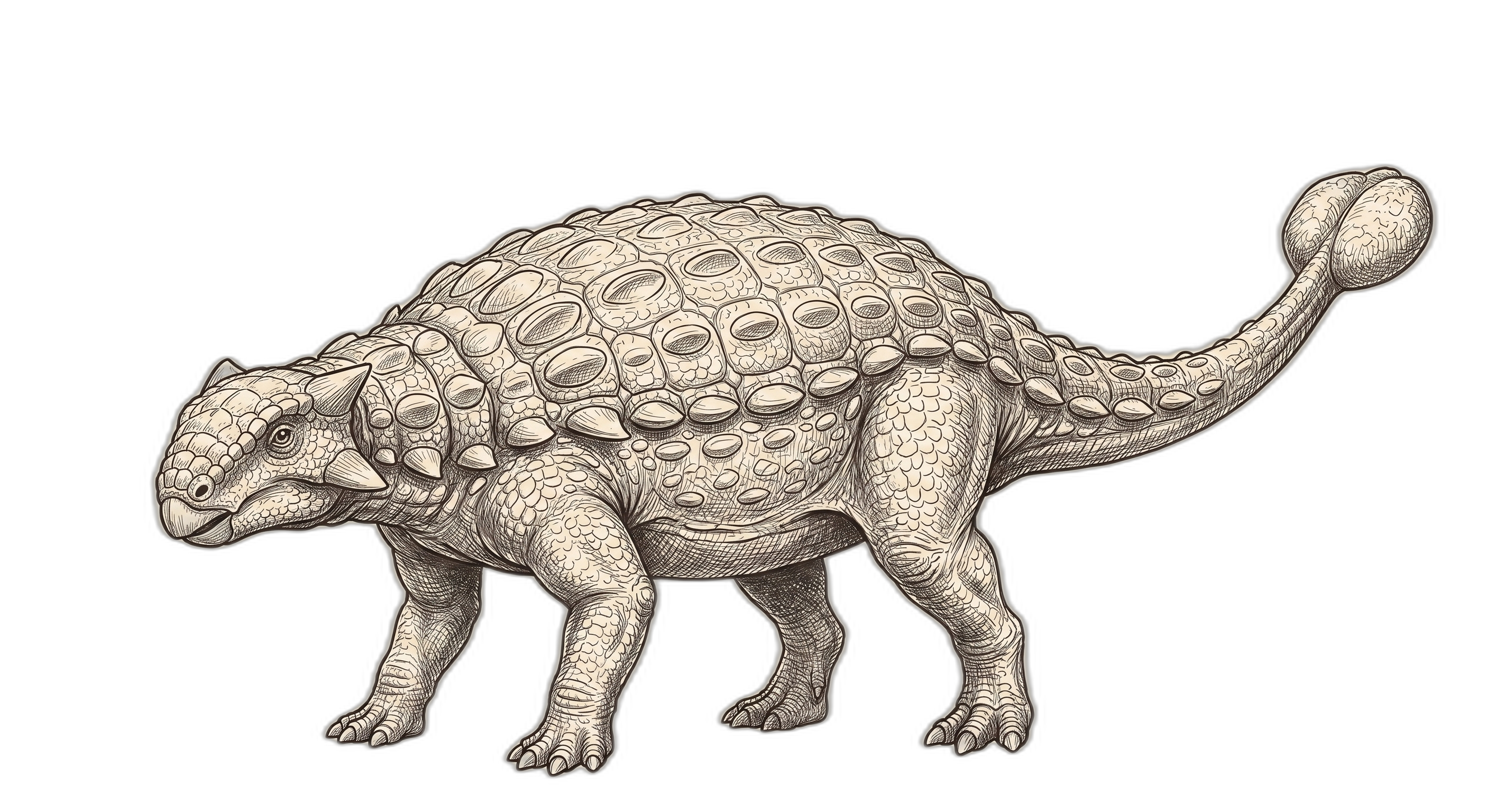
Euoplocephalus
Euoplocephalus tutus
Both nodosaurid Borealopelta and ankylosaurid Euoplocephalus represent parallel evolution within Ankylosauria toward heavy body armor.
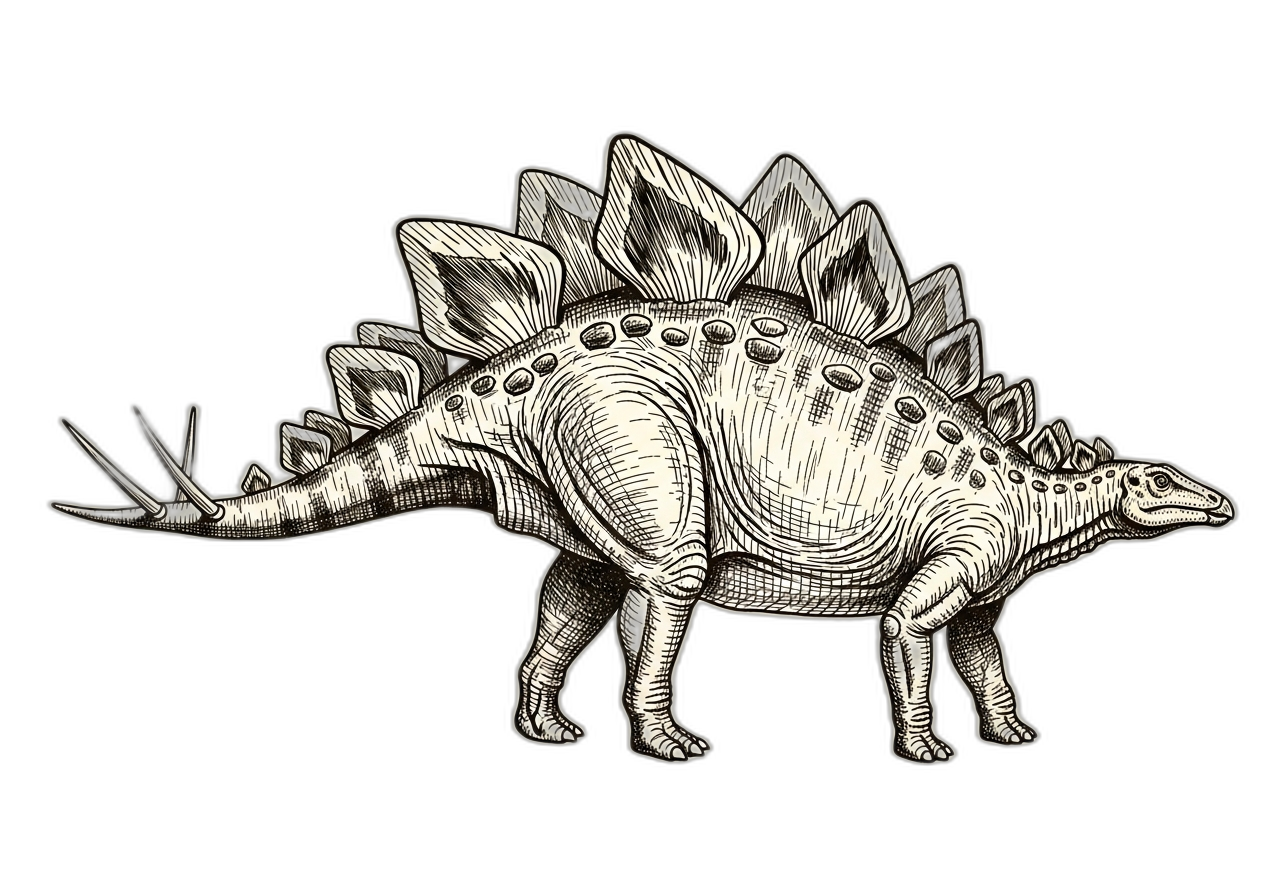
Stegosaurus
Stegosaurus stenops
Borealopelta and Stegosaurus represent convergent evolution of defensive body armor in separate thyreophoran lineages.
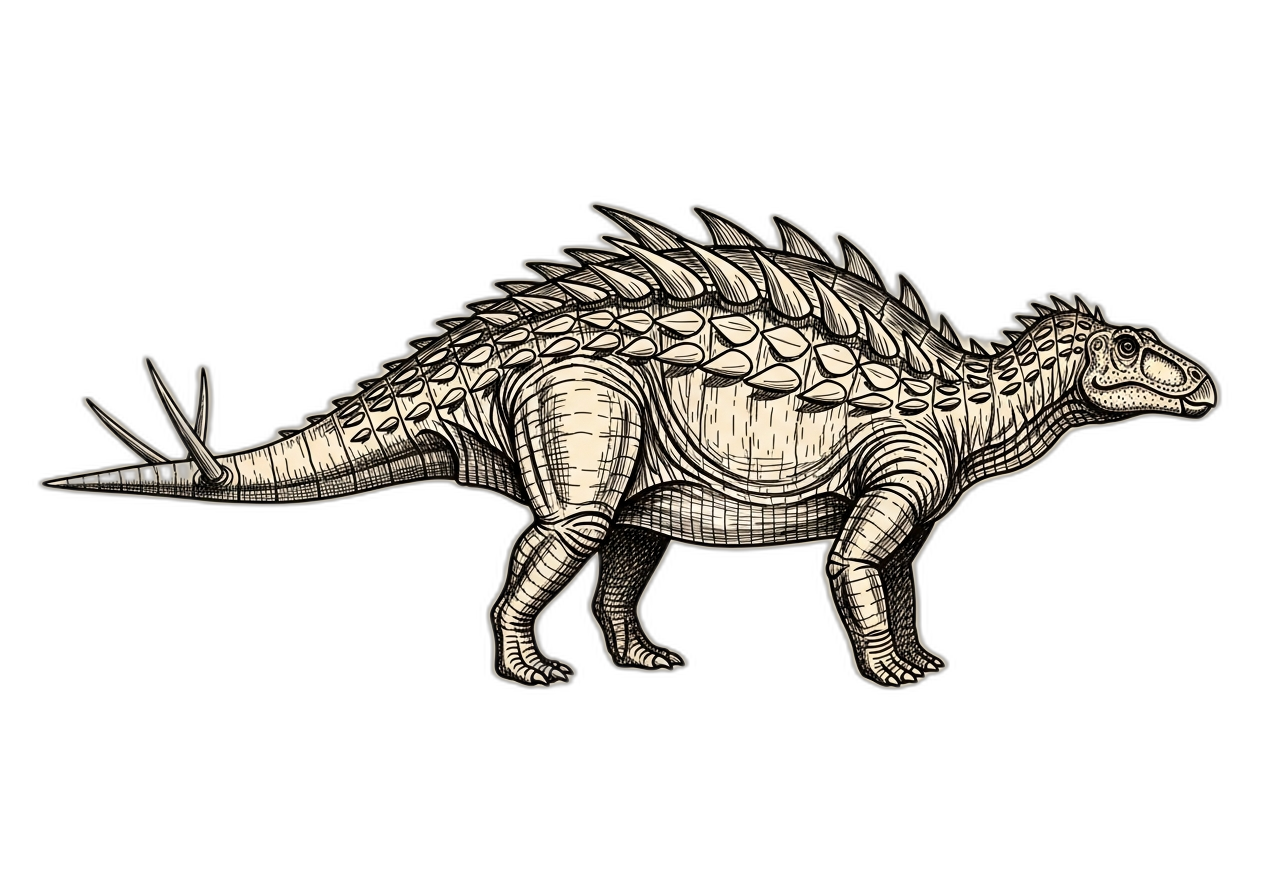
Kentrosaurus
Kentrosaurus aethiopicus
Both are armored thyreophorans that independently evolved extensive dermal armor as defense mechanisms.